30+ Trade Show Entertainment Ideas : Engage Attendees & Stand Out
Trade shows have changed.
Attendees aren't walking the floor to collect brochures anymore, now, they're looking for something worth remembering, and the booths that give them that are the ones that get talked about on the flight home.
Good entertainment does more than pull a crowd. It gives people a reason to stop, a reason to stay, and a reason to associate your brand with how they felt during those ten minutes at your booth. That emotional throughline is the whole game.
Below are 30+ ideas worth considering, plus a look at the psychology behind why they work, how to budget for them, and how to pick the ones that actually fit your audience.
From our own booths
We staff booth entertainment at trade shows across the country, so the ideas below come with results attached. HID Global ran our race simulator with a leaderboard at a Las Vegas show in August 2026 and called it "a great attendee experience." Valcourt Group ran our mini-drone racing, with an FAA-licensed pilot, in booth 555 at Apartmentalize 2026 in New Orleans. Luxottica ran Batak Pro over two days in Miami: "The event was a complete success in our eyes. Most importantly the guests had fun."
For a ranked list of the games on their own, see our guide to the best trade show booth games. Our list of interactive trade show ideas covers demos and digital activations, and our creative trade show booth ideas guide covers booth layouts and design.
Table Of Contents
Why Entertainment Works at Trade Shows
From Passive Visitor to Active Participant
How Trade Show Entertainment Has Evolved
30+ Trade Show Entertainment Ideas
Part I: Brain Challenges
Part II: VR Adventures: A Leap into Virtual Wonderlands
Part III: Tech & Innovation: Witness the Future Now
Part V: Gaming Stations: Game On!
Part VI: Miscellaneous Activities
Choosing the Right Entertainment for Your Audience
When to Bring in Professionals
Budgeting for Trade Show Entertainment
Revving Up ROI: The Unbeatable Benefits of Trade Show Entertainment
Real Winners: Authentic Case Studies of Brands that Nailed it
Why Entertainment Works at Trade Shows
Most booths blur together. Same pop-up banner, same bowl of candy, same polite pitch. Attendees always glaze over after the first hour.
The booths that break through don't just shout louder; they give people an experience worth pausing for.
There's real psychology behind that.
We're wired for novelty
The brain perks up at something unfamiliar. A new game, an unexpected activation, a format people haven't seen before…That's what earns the double-take and the pause.
Emotion drives recall
People forget facts. They remember how something felt. A laugh, a rush, a genuine "huh, that's clever" lands harder than any spec sheet.
Reward loops keep people engaged
A small win, a clever moment, a shareable photo; these release dopamine, and that good feeling gets attached to whoever delivered it. That's you.
When a booth experience ties into your brand's message, the recall gets even stronger. A tech company demoing their forward-thinking product through an AR game isn't just entertaining people; they're showing what they stand for. A sustainability brand running a plant-your-own-seed station is doing the same thing. The activity becomes a proof point.
From Passive Visitor to Active Participant
The old model assumed attendees wanted to be talked at. The new model treats them as participants. Interactive entertainment turns a booth visit into a short story the attendee helped write, and that shift changes everything about how they remember you.
A few things happen when you get this right:
Crowds attract crowds. A booth with visible activity draws curiosity from across the aisle. Once a handful of people are engaged, others want to know what they're missing.
Conversations start naturally. Someone who just finished a VR lap around a virtual track is primed to chat about it. That's a much warmer opening than "Do you have a minute to hear about our software?"
Brand impressions stick. When someone walks away from your booth, they won't be reciting your product features. They'll be telling a coworker about the thing they just did. Your logo comes along for the ride.
How Trade Show Entertainment Has Evolved
Early trade shows were tables and pamphlets. Brands hoped the right buyer would wander over. Engagement, to the extent it existed, meant a fishbowl of business cards and maybe a logo mug.
Then technology opened the door. Touchscreens, product demos running on loops, and eventually VR and AR turned booths into experiences instead of displays. And what changed isn't only the tech, it's the expectation. Attendees now assume a well-run booth will offer them something to do.
Personalization followed. Instead of one experience for everyone, good booths now adapt to the visitor. Data, real-time feedback, and flexible formats mean the same activation can feel tailored to a first-time attendee and a repeat customer.
Live interaction still matters, though. The best setups blend digital experiences with human hosts who know the brand and can carry a conversation. The tech draws people in; the people close the loop.
30+ Trade Show Entertainment Ideas
Dive in, enjoy, and let the fun begin!
Part I: Brain Challenges
1. Are You Smarter Than An AI Bot?
Trivia with a twist. Attendees face off against an AI, answering riddles and puzzles to see whether the humans can still hold their own. It's competitive, funny, and generates a steady stream of reactions people want to share.

2. Tablet Jeopardy
Everyone knows the format, which is exactly why it works. Load it with industry questions (plus a few oddball ones for laughs), add a host with some personality, and you've got a crowd. You can weave your product and brand into the questions without anyone feeling pitched.

3. VR Puzzle Rooms:
Escape rooms, minus the physical build-out. Attendees put on a headset, enter a virtual space, and have to decode clues under a timer. Great for small groups and an easy way to get people talking once the round ends.
Part II: VR Adventures: A Leap into Virtual Wonderlands
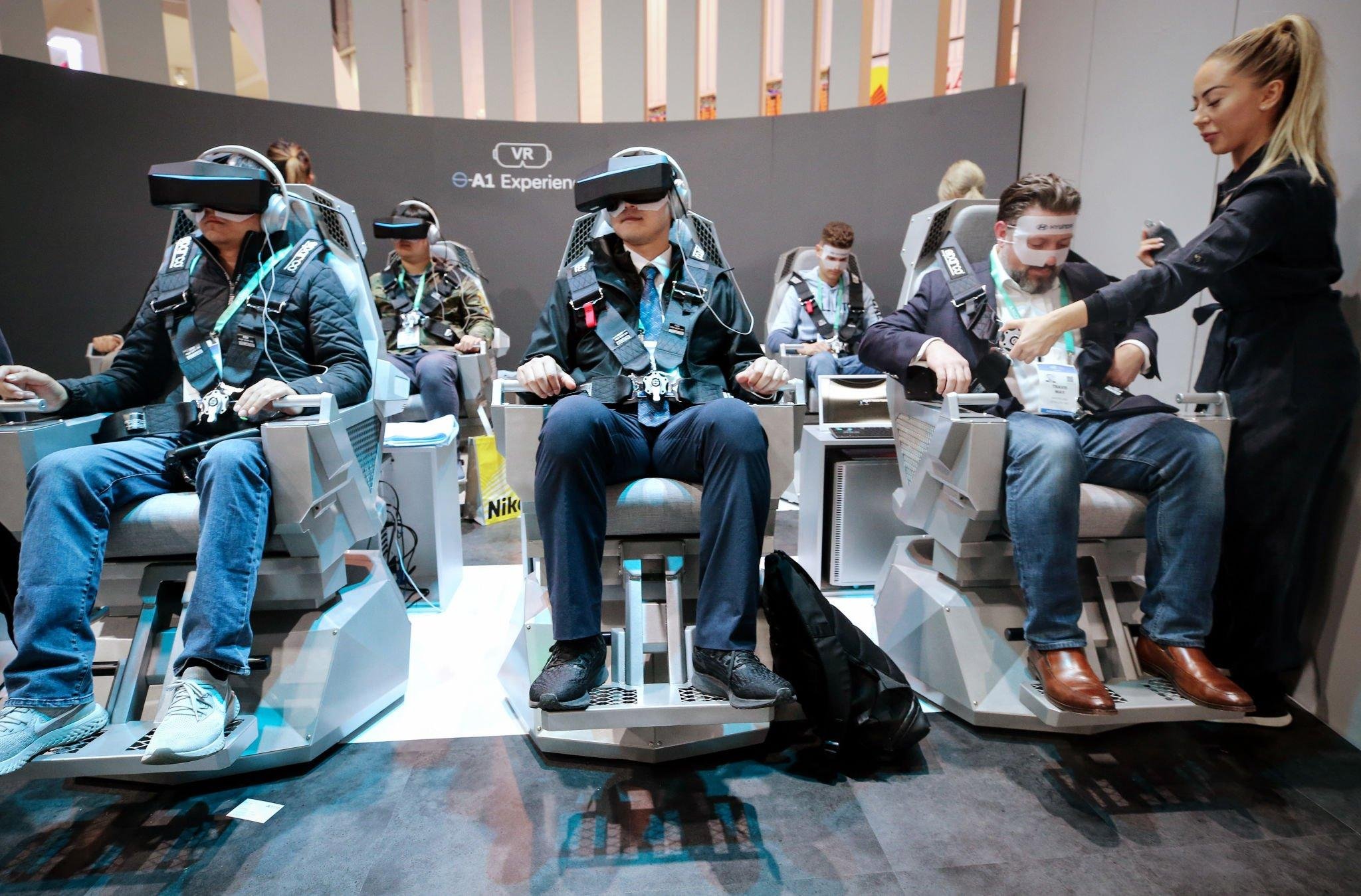
4. VR F1 Race Simulator
Strap in and run a lap. The simulator handles the thrill; you handle the conversation once they pull off the headset, still grinning.

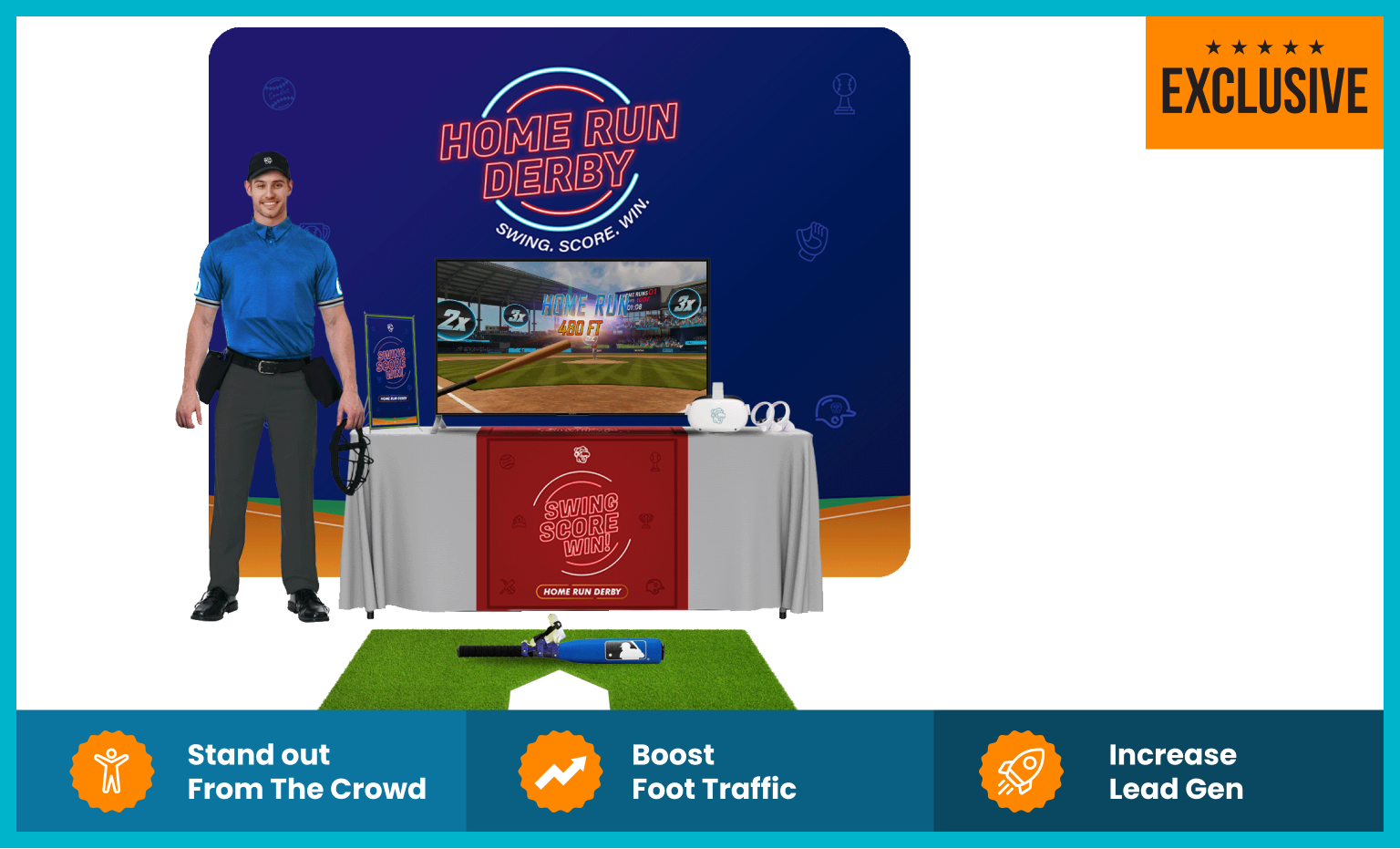
5. VR Home Run Derby
Batter up in any MLB stadium you pick. You can theme it to the city hosting the show or the client's HQ for a nice local touch.

7. VR Golf
A swing-and-putt setup on famous courses. Works for golfers and non-golfers alike, the realism is the hook.
8. Walk the Plank VR
Stand on a plank at the top of a skyscraper and try not to flinch. Everyone reacts. Not everyone makes it across. The crowd that gathers to watch is part of the appeal.
9. VR Skiing Experience
Skip the snow and send attendees down a mountain run. Good for adrenaline, good for footage.
10. Relaxation Pods: Quick relaxation in between the hustle
Every trade show floor needs a pressure valve. A VR-driven relaxation pod transports someone to a quiet beach or forest for a few minutes. People leave calmer and oddly grateful to your brand for giving them a break.
Part III: Tech & Innovation: Witness the Future Now

11. Social Media Vending Machine:
Instead of cash, attendees "pay" with a post, share, or follow. They get a branded item in return. It's a tidy trade that generates organic social reach while the show is still happening.
12. Live 3D Printing
A printer building something real, layer by layer, is genuinely mesmerizing. Small branded keepsakes make excellent takeaways.

13. Laser Cutting Demos:
Watching a laser cut a design into wood, acrylic, or leather is both hypnotic and educational. Personalized tags and coasters make great custom swag.

14. Interactive LED Walls:
Attendees "paint" with their fingers on a wall that glows back. It photographs well, which matters more than people admit.
Part IV: Augmented Adventures
15. Hologram Slots:
A holographic casino vibe without the actual gambling. The visuals carry the experience; the brand gets associated with something futuristic.

16. Augmented Reality Activities:
AR games layered onto the booth environment. Titles like Blaston, Cubism, and Demeo pull people into gameplay that feels new even to frequent gamers.

17. AR Treasure Hunts:
Digital clues scattered around the booth (or the whole venue, if you've coordinated with the organizer). People compete or collaborate to track down the "treasure," which means repeated visits to the booth.
18. Metaverse Experiences
A persistent digital space attendees can drop into. Useful for brands whose story includes a digital-forward angle and want to prove it rather than claim it.
Part V: Gaming Stations
19. Golf Simulator:
A full swing bay on the floor. No VR headset, just clubs, sensors, and a screen. Lower barrier than VR golf for people who'd rather not put gear on their head.

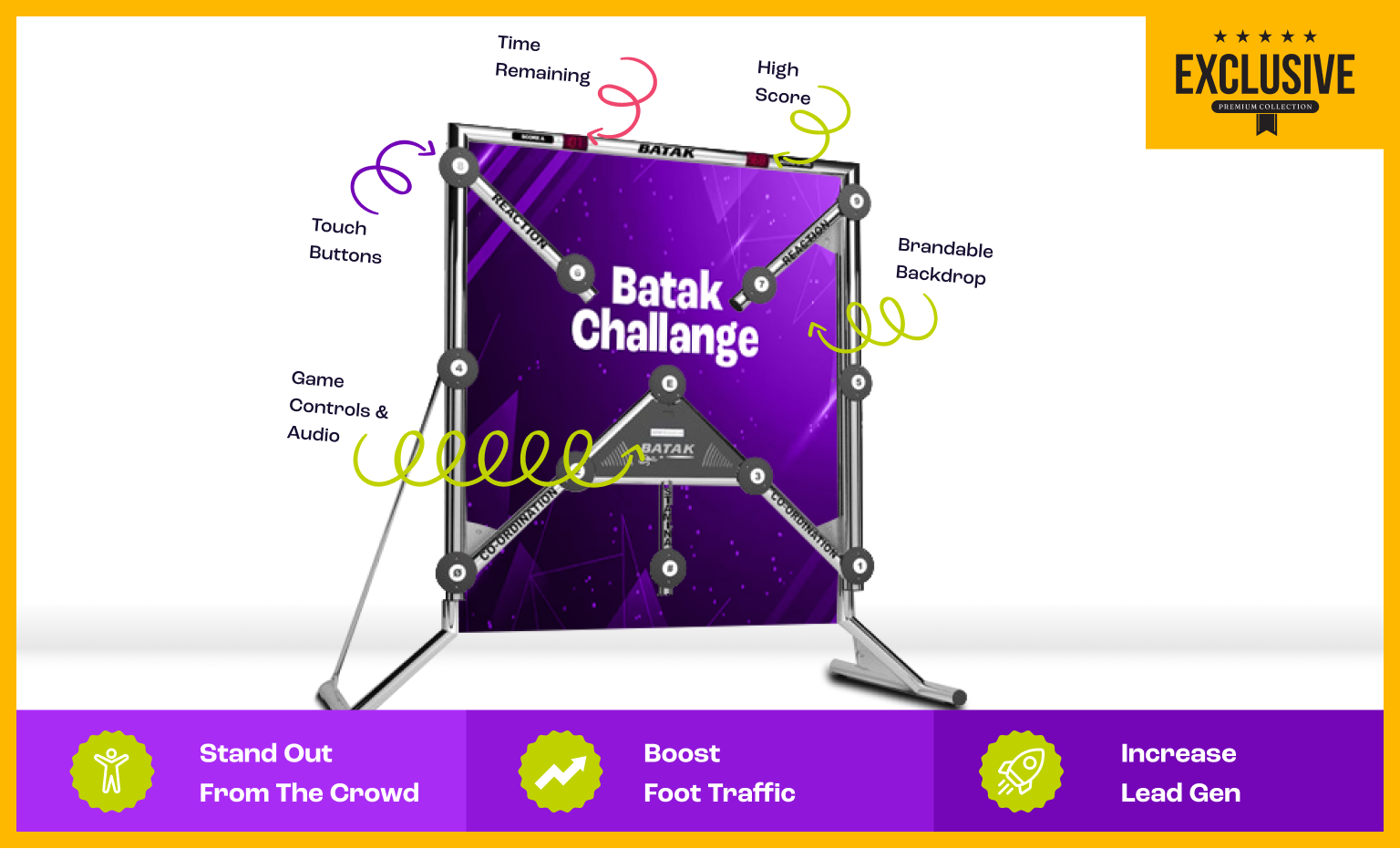
20. Batak Pro:
A reflex board covered in lights. Hit them as fast as you can as they flash. Simple, competitive, and great for a leaderboard.
Part VI: Miscellaneous Activities
21. Live Podcasting Booth:
Record interviews with clients, industry guests, or attendees themselves. It doubles as content for later and gives visitors a reason to stick around.
22. Interactive Brand Storytelling:
Walk attendees through your origin story, but let them contribute along the way — a wall they can write on, a choose-your-own-path display, or a station where they add their own piece to the brand timeline.
23. Green Screen Photo Booth:
Classic for a reason. Put attendees on a beach, a mountaintop, or a moon base. They'll post it.
24. GIF-making Stations:
A few seconds of looped silliness with effects and props. Easy to share, and sharing is the point.
25. DIY Merchandise Stations:
Let people customize a T-shirt, tote, or hat. Because they made it, they'll actually use it.
26. Retro Game Booths:
Pac-Man, Tetris, Space Invaders. Nostalgia travels well across age groups, and arcade cabinets draw lines on their own.
27. Vintage Vinyl Listening Stations:
A turntable, a stack of records, a few pairs of headphones. Unexpected at a trade show, which is the whole idea.
28. Silent Disco Booth:
Headphones, a couple of channels, and a small dance floor. Watching people dance in silence is funny in a way that travels on social.
29. Live Art Demonstrations:
A painter, muralist, or digital illustrator working in real time. People will stand and watch for a surprisingly long time.
30. Gourmet Coffee Bars:
Real espresso, real baristas. The line becomes the activation. Conversations happen naturally while people wait.
31. Zen Garden Nook:
A quiet corner with water features, natural textures, and seating. Trade show floors are loud. A deliberate calm spot is memorable in a way flash isn't.
32. Hydration Bar:
Infused waters, electrolyte drinks, maybe a few non-caffeinated options. Attendees appreciate it by hour three, and the booth becomes a useful stop, not just a sales one.
Choosing the Right Entertainment for Your Audience

A giant inflatable duck might be a hit at one show and fall flat at the next. Matching the activation to the audience matters more than picking the flashiest option.
Know Your Crowd
Tech buyers, clinicians, procurement folks, and creative directors all want different things. Past attendee data, registrant demographics, and a quick scan of the show's social media will tell you a lot. Don't guess based on your team's taste.
Pilot when you can
If you're between a few options, run a small version internally or at a smaller regional show first. Watch what people gravitate toward. The reactions are usually more telling than survey responses.
Mix trends with classics
New tech draws attention, but a well-run photo booth never dies. A combination appeals to a wider slice of the floor and gives you a fallback when the shiny thing has a line too long for some visitors.
Balance interactive and passive
Some people want to play; others want to watch, rest, and then play. Leaving room for both keeps your booth welcoming instead of intimidating.
Work within your space
Drone racing needs floor area and safety considerations. A silent disco fits in a footprint a quarter the size. Confirm what the venue allows before you fall in love with an idea.
Design for everyone
Accessibility isn't a nice-to-have. Consider mobility, sensory needs, language, and age range. An inclusive booth reaches more people, and it reads well to anyone paying attention.
When to Bring in Professionals
You can run a lot of a booth yourself. Entertainment is usually the part where an experienced partner pays for itself. Logistics, tech support, backups, staffing, and on-site troubleshooting are a lot to manage alongside running the actual show.
If you want help, that's what we do. Trade Show Labs has been building these activations for over a decade, and we've seen plenty of scenarios you'd rather not discover on your own at 8 a.m. on show day.
Budgeting for Trade Show Entertainment
Budgeting isn't about cutting. It's about spending where it counts.
Sort your wants from your needs
Start with a plain list: must-have, nice-to-have, would-be-cool. The drone race might be impressive, but if a GIF station will drive more engagement with your specific audience, the GIF station is the better line item.
Don't default to high-tech
Tech activations are great, but a vinyl station or a vintage game setup can deliver comparable engagement at a fraction of the cost. The best booths usually blend tiers.
Watch the hidden costs
Rental prices are only part of the picture. Tech support, setup, backup units, power drops, staffing, and shipping all add up. Pad your estimates rather than hope.
Negotiate and collaborate
Vendors favor repeat clients. If you're running multiple shows, ask about bundle pricing. Cross-brand partnerships can offset costs too — a beverage sponsor for your coffee bar, for example, can turn a cost center into a shared activation.
Maximizing Engagement
A booth on its own isn't engagement. Activity isn't engagement either. Engagement is what happens when people feel like they're part of something, even briefly.
Tap into curiosity
A question on a sign, a clever headline, a reason to wonder what's going on inside — curiosity pulls people across aisles.
Use digital where it helps
Not because it's modern, but because it extends reach. A GIF booth gives you social content. A vending machine gives you follows. Think about which activations create something people will carry past the floor.
Design the visit as a path
First impression, core experience, sendoff. People remember the beginning and the end more than the middle, so put real thought into both.
Ask for feedback
Live polling, a digital suggestion box, or a brief chat at the exit can tell you more in a day than a post-show survey will a week later.
Build in quiet
A relaxation pod or a coffee spot isn't filler. It's where better conversations happen, because attendees aren't trying to talk over the floor noise.
The ROI Case for Trade Show Entertainment
1. More traffic
Booths with activity draw visitors. A visible crowd signals "something worth seeing" faster than signage.
3. Stronger recall
People remember how they felt. Weeks later, the team back home still associates the experience with your brand.
2. Better conversations
An attendee who just had fun is warmer, more talkative, and more willing to ask real questions. That's where leads come from.
4. Positive association
Trade shows exhaust people. Being the booth that made someone's day easier or more interesting builds goodwill that shows up later in the sales cycle.
5. Social extension
Photos, GIFs, and videos reach people who weren't at the show. For the cost of the activation, you're also buying organic reach.
Brands That Got It Right
1. Sony PlayStation at E3
Instead of a wall of screens, Sony built walkable worlds from their top games. Attendees stepped into the environments rather than watching them. The booth became the story journalists led with.

2. HP at CES
HP leaned into touch. Live 3D printing, VR stations, hands-on product areas. Visitors stayed longer than the floor average, which translated into stronger media coverage and real post-show conversations.
3. Starbucks at BookExpo America
They gave tired readers somewhere to sit and read. Comfortable chairs, fresh coffee, and books within reach. It tied the brand to the feeling of a good afternoon in a way a banner never could.

4. Levi's at Fashion Expo
A gallery of the jeans across decades, on-site tailoring, and a small museum of brand history. Attendees reminisced about their first pair. The booth sold the story, and the product sold itself.
The thread through all four: the booth was an experience, not a display. The product was present, but it wasn't the pitch. The pitch was the feeling.
Wrapping Up
Trade show floors are crowded and loud, and most booths fade together by lunchtime. The ones that don't fade are the ones that gave attendees a reason to stop, something to do, and a reason to remember it afterward. That's not a trick. It's a choice about where to spend your floor space and your budget.
If you want help turning your next booth into one of the ones people talk about, we'd be glad to talk through options with you.
Resources for Planning & Executing Trade Show Entertainment
Eventbrite: Perfect for ticketing, registration, and event management, Eventbrite ensures you have all your attendee details sorted and streamlined.
Bizzabo: This all-in-one event software helps in creating rewarding and memorable experiences. It's especially useful for trade show organizers looking to drive attendance and measure success.
Whova: Known for its attendee engagement and management capabilities, Whova is great for networking and boosting engagement during trade shows.
Hootsuite: Social media plays a crucial role in modern trade shows. Use these platforms to schedule, manage, and analyze your social media promotions and engagement.
Aisle Planner: From timeline organization to managing vendors, this tool ensures that you're always on top of your trade show planning.
VirtualRealityRental: The best virtual reality rental service in the US, providing a vast variety of VR entertainment for corporate events.
Equation Events: The trusted partner for businesses across the US seeking top-tier corporate event entertainment.
Trade Show Labs: Yours truly, setting the benchmark in trade show entertainment, consistently crafting memorable moments for all attendees.